

The cheapest patio chair is not always the least expensive one to own, but a higher price tag is no guarantee of better value either. To compare outdoor furniture materials fairly, add up the costs that follow the purchase: maintenance, replacement parts, cushions, repairs, storage, and how soon the whole piece may need replacing.
The material label is only a starting point. A metal chair can have an aluminum or steel frame; “wicker” may mean a synthetic weave over a separate frame; plastic quality varies; and wood-care costs depend partly on whether you want the surface to weather naturally or keep a particular finish. Compare complete products, not just the names of the materials.
Table of Contents
- A fair way to calculate ownership cost
- Where costs tend to show up by material
- The parts people forget to budget for
- Questions to ask before buying
- Frequently Asked Questions
A fair way to calculate ownership cost
Choose a comparison period that matches your plans, such as the next five or ten years, and compare furniture that provides the same seating capacity and includes the same basics. A small metal bistro set is not a fair cost comparison with a large cushioned sectional.
Use this simple formula for each option:
Use actual current quotes wherever you can. If you do not know how long a part will last, note the uncertainty rather than making up a replacement schedule. Keep the comparison period and assumptions consistent across options, and do not count resale value unless you have a realistic basis for estimating it.
Also count your time. Cleaning a surface is a small task; repeatedly applying a finish or taking a heavy set into storage is a different commitment. You can record your own hours and decide what they are worth, even if you do not assign them a dollar amount.
Where costs tend to show up by material
This table is a budgeting map, not a claim that every item will need the listed work. Product construction, climate, exposure, and care all matter. Its most important lesson: investigate the components that can fail before the material you can see.
| Material or construction | Costs to check over time | Ask before buying |
|---|---|---|
| Aluminum or steel furniture | Finish touch-ups or corrosion treatment where relevant; loose or damaged fasteners; cushion and cover replacement. | Which metal is used? How is it finished? Are hardware and replacement cushions available? |
| Synthetic wicker over a frame | Repair or replacement of broken weave; wear or corrosion in the frame beneath it; cushions and covers. | What is the frame made of? Can the weave or individual sections be repaired? |
| Plastic or resin | Cleaning; replacement if the piece becomes brittle, cracks, or no longer suits the way you use it. | What type of plastic is it? Is the product designed for prolonged outdoor exposure, and can damaged parts be replaced? |
| Wood | Cleaning and, if desired, treatments to preserve the chosen appearance; hardware and joint repairs. | What care does the maker require? Can you accept natural weathering, or will you pay to maintain the original color? |
These are prompts for collecting comparable quotes, not material-specific lifespan guarantees. A component-level warranty, care guide, and replacement-parts policy are more useful than a broad promise that a whole set is “built to last.” Nordic Swan’s outdoor-furniture criteria likewise emphasize durability, warranty, spare parts, and circular design rather than treating material choice as the only measure of longevity.
Metal: separate the frame from its finish
Metal furniture can be a low-effort choice, but “metal” does not tell you whether a frame is aluminum or steel, what protects its surface, or how easily it can be repaired. Aluminum resists rust, while steel can require attention if its protective finish is damaged. The condition of joints, fasteners, and any hidden areas matters too.

Before buying, ask what finish is used and whether the manufacturer sells touch-up products or replacement hardware. Iowa State University Extension recommends seasonal cleaning and checking fasteners as part of outdoor-furniture care; its guidance also notes that exposed bare metal on wrought iron should be touched up to help prevent rust from spreading. Follow the product’s own instructions if they differ from general advice.
Wicker: the weave is not the whole chair
“Wicker” describes a weaving style, not necessarily the material. Outdoor pieces may use a synthetic weave over a metal frame, so there can be two separate failure points. If the weave loosens or breaks, a sound frame might remain usable; if the frame fails, the intact-looking surface may not save the piece.
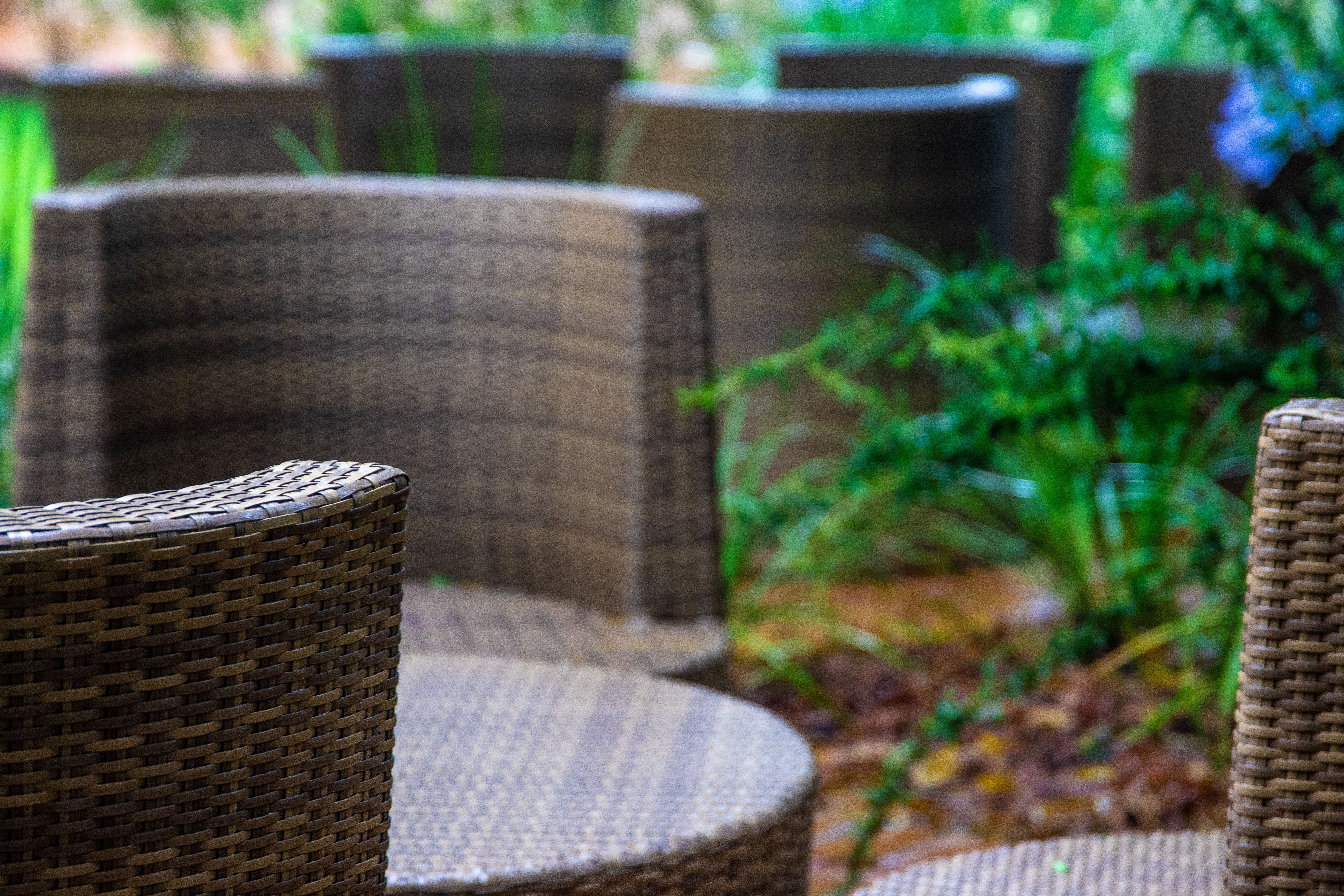
Find out whether repairs are possible, what the frame is made from, and whether the cushions are standard sizes that can be replaced. If a retailer cannot identify the weave or frame material, treat that uncertainty as a cost risk, not as proof of poor quality.
Plastic: distinguish easy care from easy replacement
Plastic furniture is often simple to clean and move, but low maintenance does not automatically mean low lifetime cost. A low purchase price can be worthwhile for occasional use, a temporary home, or a setup where easy stacking matters. It is less compelling if the product is likely to be discarded as soon as a seat cracks or the finish becomes unacceptable.

Ask what plastic the product uses, how it should be stored or cleaned, and whether the maker offers replacement pieces. Avoid assuming every resin chair has the same outdoor performance just because it looks similar in a product photograph.
Wood: decide whether appearance is part of the budget
Wood-care costs depend partly on the finish you want. If you are comfortable with natural weathering, you may avoid some appearance-related treatments. If you want to preserve the original tone, include the recommended products and the time needed to apply them. Do not confuse color change with structural failure; they are different reasons for replacing furniture.
Wood species, construction, drainage, and fasteners all affect what care a particular piece needs. Read the maker’s directions and check whether joints, slats, and hardware can be repaired individually. A replaceable slat can extend the useful life of a bench without making you buy a new one.
The parts people forget to budget for
Frame material gets most of the attention, but it is rarely the only part that wears out. Include these items for every material option:
- Cushions and fabric: Check whether cushions are included, removable, and replaceable in standard dimensions. Compare fabric and cushion replacement prices before purchase.
- Delivery and assembly: Add these costs consistently. A flat-pack price and a delivered, assembled price are not directly comparable.
- Protection and storage: Covers, indoor storage, or moving pieces seasonally may add cost and effort. Only include what you would realistically do.
- Repairability: A small replaceable component can be cheaper than replacing a complete chair. Check parts availability and whether you can remove the part without specialist tools.
- Care products and labor: Use the manufacturer’s maintenance schedule. A product that needs no specialist treatment may still need routine washing and inspections.
Planning the whole outdoor space can make these decisions easier. Furniture and facade materials have different jobs and maintenance instructions; for example, exterior cladding is not a guide to how a chair frame will wear, even when both are exposed to sun and rain.
For products carrying an ecolabel, check what the certification actually covers. Nordic Swan’s published criteria include requirements related to product durability, warranties, spare parts, and circular design. That does not guarantee the lowest price, but it gives buyers concrete questions to ask about repair and replacement.
Questions to ask before buying
Before you compare final totals, get answers to these questions in writing where possible:
- What are the frame, surface finish, weave, and hardware made from?
- Which care tasks does the manufacturer recommend, and how often?
- What does the warranty cover: frame, finish, weave, cushions, or only manufacturing defects?
- Are parts such as slats, feet, fasteners, and cushions available separately?
- Does the furniture need to be covered, stored, or kept out of direct exposure for the warranty to apply?
- Can the product be repaired with ordinary tools, and what is the price of the likely replacement parts?
My preference is to choose a piece whose likely maintenance I will actually do. A material with excellent theoretical durability is poor value if its upkeep is something I will ignore; a simpler option can win when its purchase price, expected use, and replacement plan all fit the same time horizon.
The right comparison is not “Which material lasts longest?” but “What will this particular set cost me to use, care for, and repair?” Once those line items are visible, the material that fits your budget and habits is usually much clearer.